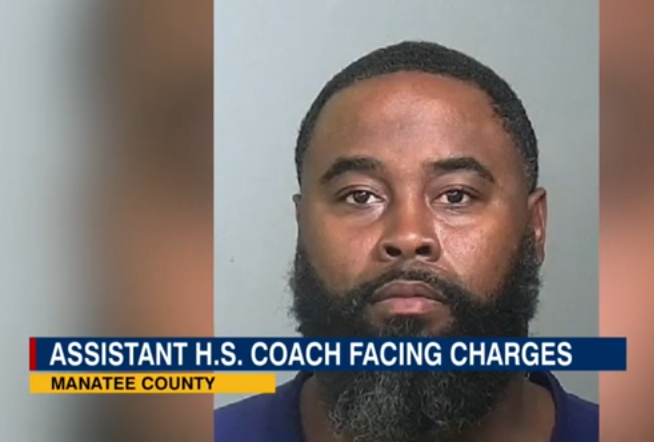
The recent case involving a Manatee County assistant football coach accused of sending sexual text messages to a student has shaken many families across Bradenton and the wider Florida community. This is not the first time something like this has happened in our school system, and sadly, it likely won’t be the last. But this one hits differently because it highlights a pattern that many parents, teachers, and community members have been talking about quietly for years: schools are not doing enough to ensure the safety of our children.

Bradenton High School, located right here in Florida, is now facing the kind of scrutiny no school ever wants. Parents are alarmed, students are uncomfortable, and people are asking the same question over and over again: How did this happen? More importantly, how many more cases like this are going unnoticed simply because a child was too afraid to speak up?
For a long time, Florida policymakers have debated issues like whether students should be allowed to have cell phones in schools or whether classrooms should have video monitoring to protect both staff and children. Many official voices insisted that phones were distractions and cameras were unnecessary. But moments like this prove the opposite. Technology isn’t the enemy — sometimes it’s the only witness we have.
If students didn’t have cell phones, how would a parent ever learn about inappropriate messages? If classrooms or athletic spaces didn’t have cameras, what proof would a child have when an authority figure crosses the line? These questions matter because, far too often, when a child comes forward, it becomes their word against an adult’s. And historically, schools tend to lean toward believing the adult — especially if that adult has a long work history, a clean record on paper, or a respected position like coach or teacher.
But what does a “clean record” even mean anymore? The issue many people in the community are raising is that our school systems are not doing the kind of deep, rigorous background checks they should be doing. Many positions inside schools remain understaffed, rushed to fill, or filled by people who look good on paper but aren’t truly vetted for their behavior, intentions, or psychological stability. A person can pass a background check and still be a danger to children. That’s the reality nobody wants to acknowledge.
And what makes situations like this even more disturbing is that they are not isolated incidents. Over the years, Florida has seen bus drivers arrested for misconduct, teachers accused of harassment, and now coaches crossing boundaries that should never be crossed. This is not new — it is a growing pattern. And each time something like this happens, we hear promises of “reviewing policies,” “cooperating with investigators,” and “tightening safety procedures.” But then the cycle repeats itself.
It is no wonder many families are losing trust in the education system. It is no surprise schools are closing or attendance is dropping. Parents are exhausted from worrying not only about their child’s academic success but also about their physical, emotional, and moral safety while on school grounds.
We grew up believing schools were safe. A place where teachers respected children, where coaches were role models, where bus drivers protected students like their own. But today’s reality forces us to accept a harder truth: some of the very people hired to protect our children are the ones harming them.
So what do we do as a community?
We speak up. We demand genuine accountability. We push for transparency in hiring practices, mandatory psychological screenings, ongoing background checks, and — yes — technology in classrooms. Cameras protect students and staff. Phones give children the ability to ask for help when something doesn’t feel right. These tools don’t destroy education. They protect the ones who are there to receive it.
At Bradenton High School, the community is hurting. Parents feel betrayed. Students feel confused and unsafe. But the conversation cannot stop with one arrest. This must be the moment Florida finally confronts the bigger issue — that safety cannot be optional and that children should never have to choose between getting an education and protecting themselves from the adults entrusted with their care.
If the system won’t protect our children, then the community must demand it. And we won’t stop talking until it happens.