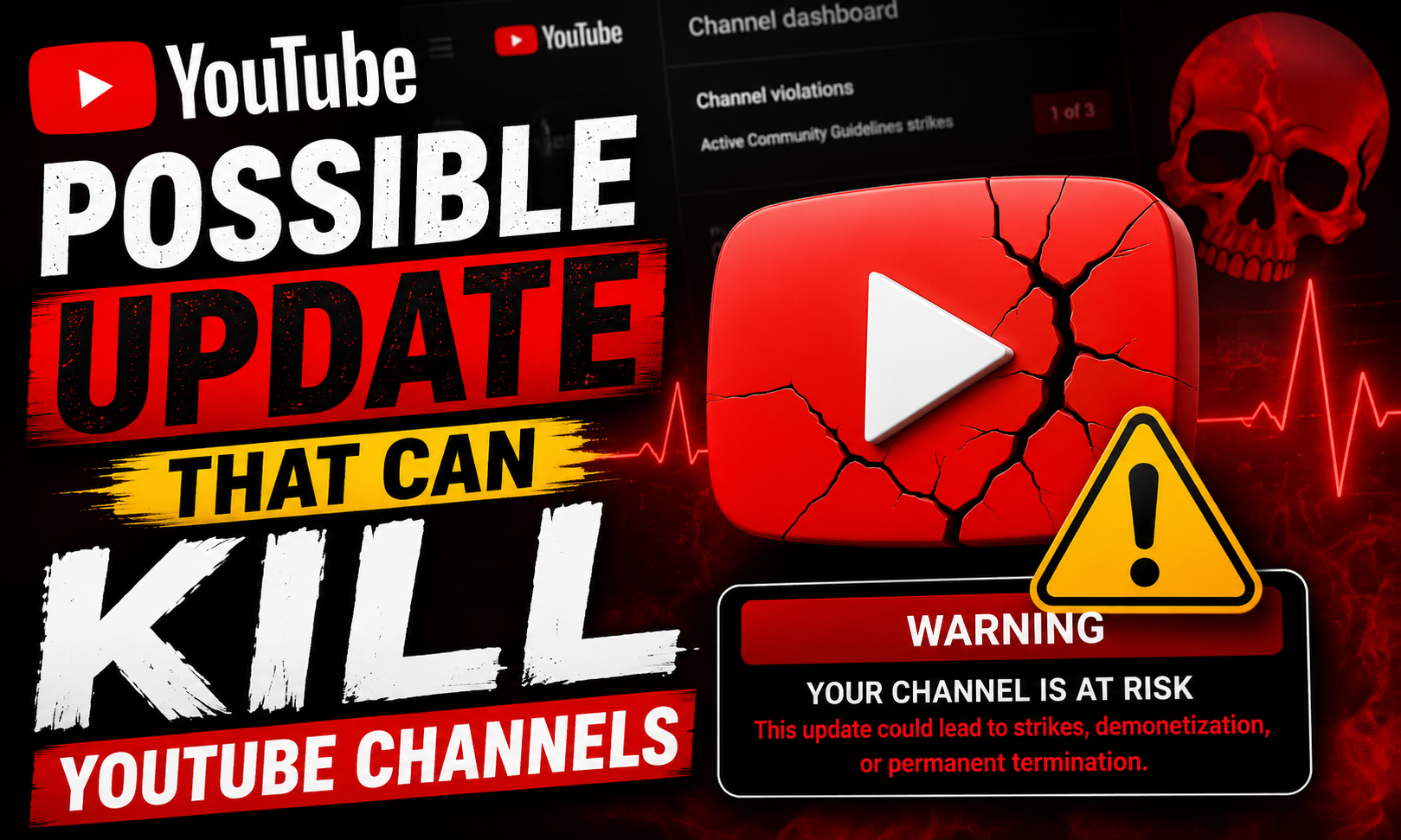


I’ve been talking about this for a long time, and now more and more people are starting to speculate about it. Let me make something very clear before I go any further: this has NOT been confirmed by YouTube. Right now, this is heavy speculation that has been circulating, and it’s coming from some of the same people who previously warned that YouTube was getting ready to make major changes after AI became a big part of social media. If this speculation turns out to be true, it could completely change the way independent creators report the news.
The concern is that YouTube could eventually crack down on creators who report on major news stories while adding information, theories, or context that cannot be verified. In other words, people are saying YouTube may want creators to stick strictly to the verified facts instead of allowing speculation or unsupported claims. Again, this has not been confirmed, but it has become a major topic of discussion.
Think about everything that happened during the Nolan Wells case. There were hundreds of people online discussing the case, sharing opinions, making guesses, and adding details that had never been confirmed. Some creators simply reported what was publicly known, while others started filling in the blanks themselves. That’s where people believe YouTube could eventually step in and say enough is enough.
Now let’s talk about something else that doesn’t get enough attention. Traditional news stations created these stories. Years ago, if you wanted the news, you watched television. Today, people don’t always have cable. They go straight to YouTube. That opened the door for thousands of independent creators. Many of them now stream news clips, screen share articles or videos, and then spend hours giving their opinions while earning money from those broadcasts.
This is where another issue comes into play—copyright. Publishers have invested money, reporters, photographers, and crews into creating that content. Some believe that independent creators are making significant income by using those reports without creating enough original material themselves. Others argue that commentary and criticism are valuable and can qualify as fair use depending on how they’re done.
There are also growing concerns about AI. People can now ask AI for summaries of breaking news instead of visiting the original news websites. That has many publishers worried because fewer people are clicking directly on their articles. At the same time, YouTube creators are discussing those same stories with audiences that can sometimes be larger than the original publisher’s.
If you’re a media company, that’s a huge concern. So when you put all of these issues together—AI, copyright disputes, misinformation concerns, and independent commentary, you can see why so many people believe major changes could eventually happen.
Some people believe YouTube wants more control over what appears on the platform, how creators make money, and how copyrighted material is used. Others believe publishers are pushing back because they feel their work is being reused without enough protection.
Whether any of this actually happens remains to be seen. But if YouTube ever decides to tighten its policies, it could completely change the landscape for independent news channels and commentary creators. Thousands of creators would likely have to rethink how they report stories, what they can show on screen, and how they separate verified facts from personal opinions.
Right now, this is speculation not confirmed policy. But it’s a conversation worth paying attention to because if major changes ever do come, they could affect nearly everyone who creates news and commentary content online.
What do you think? Do you believe YouTube is heading in this direction, or do you think independent creators will continue reporting the news the way they always have?