
By Independent Journalist Fran Walker, Kingdom Influence Media
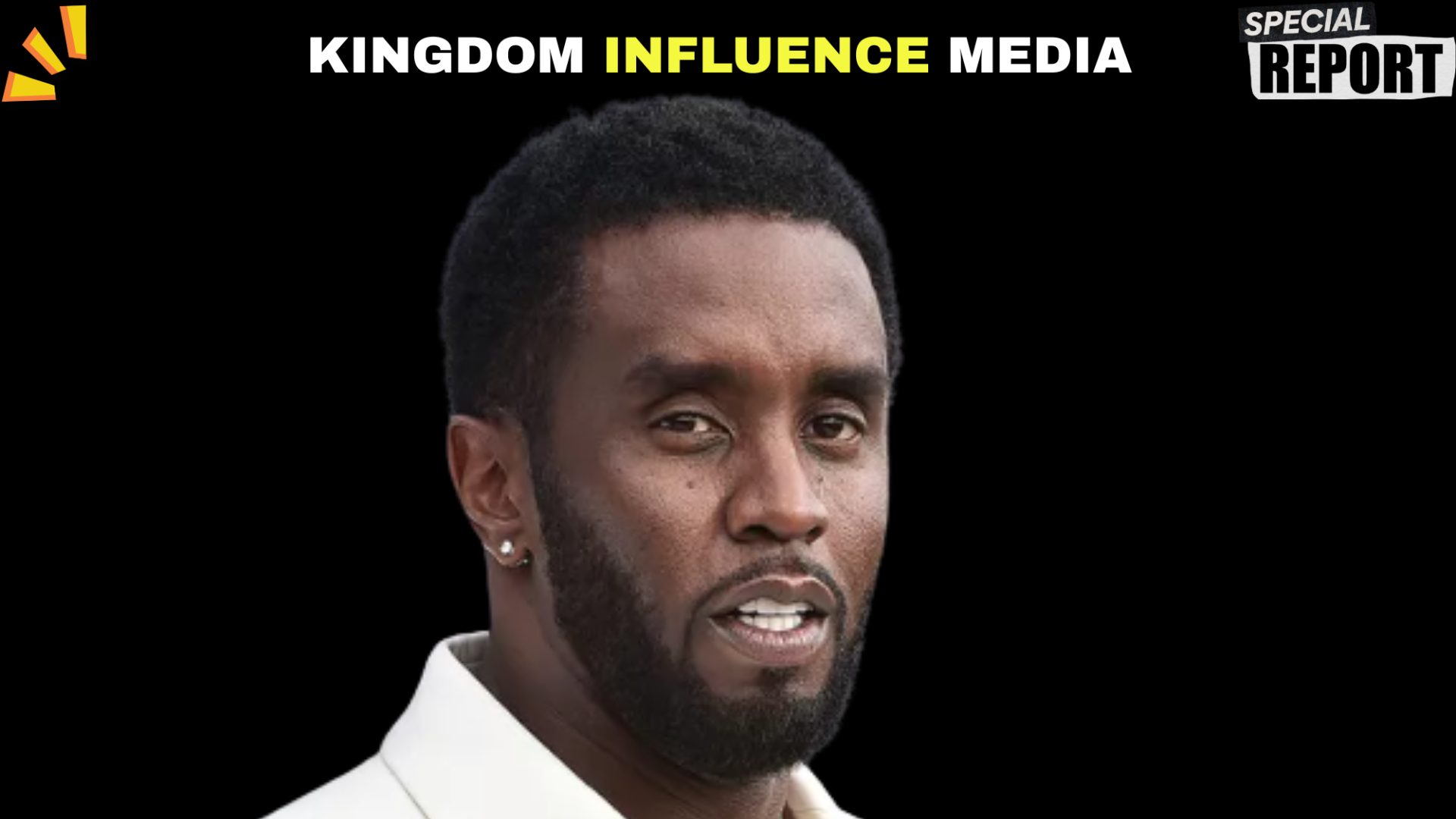
This is the moment many have been waiting for. After months of headlines, legal battles, and endless speculation, Sean “Diddy” Combs is facing sentencing today. What’s unfolding is the culmination of a case that has dominated news cycles, shaken the entertainment industry, and left people asking serious questions about power, accountability, and justice.
How We Got Here
Sean “Diddy” Combs was indicted in September 2024 by a federal grand jury on multiple charges. Among them were racketeering conspiracy, sex trafficking by force and coercion, and transportation of individuals for prostitution. Alongside these criminal counts, a wave of civil lawsuits also came forward, with numerous individuals accusing him of sexual abuse, coercion, and other forms of misconduct.
From the very beginning, Combs pleaded not guilty. He remained in federal custody after his arrest because bail was denied multiple times. Judges cited concerns about witness intimidation and the seriousness of the allegations.
2. The Trial and the Jury’s Decision
The trial began in May 2025 in the U.S. District Court for the Southern District of New York. Over weeks, jurors heard testimony from alleged victims, saw video evidence, and listened to arguments from both sides.
On July 2, 2025, the jury reached its verdict. Combs was acquitted on the most serious charges, including racketeering conspiracy and sex trafficking by force or fraud. However, he was convicted on two counts under the Mann Act, a law that prohibits transporting people across state lines for prostitution or illegal sexual activity.
These convictions alone carry significant penalties, and because of their nature, they fall under strict federal sentencing guidelines.
What Prosecutors and the Defense Are Fighting Over
As today’s sentencing began, both sides had already filed detailed arguments about what sentence they believe is fair.
The prosecution has argued that Diddy should serve more than 11 years in prison. They point to the testimony of victims, the harm caused, and the power imbalance that allowed Combs to manipulate people. They claim a stiff sentence is necessary to show accountability and to deter others in positions of power from abusing it.
The defense, meanwhile, is asking for a dramatically lighter sentence, as low as 14 months—essentially the time Combs has already spent behind bars since his arrest. They claim he has taken steps toward change while in custody, pointing to programs he started to mentor fellow inmates. They argue that evidence from charges he was acquitted of should not influence his punishment for the charges where he was convicted.
The U.S. Probation Department has suggested a middle ground, recommending a sentencing range of roughly 5 to 7 years. But ultimately, it is up to the judge to decide.
What’s Happening Today
The sentencing hearing began this morning in Manhattan federal court. Combs arrived in the courtroom wearing his prison-issued clothing, flanked by his legal team. His family, including his mother and children, are present.
Victim impact statements are playing a major role in today’s proceedings. One of the most significant came from Cassie Ventura, who has been central to this story from the beginning. In her letter to the court, she described her experiences with Combs and urged the judge to impose a strong sentence. Another accuser, referred to under a pseudonym, initially planned to testify live but instead submitted a written statement, possibly due to fear or pressure.
The judge has already indicated that he sees little remorse from Combs. This could weigh heavily against him when the sentence is decided. Prosecutors continue to push for more than 11 years, while defense attorneys stress rehabilitation, family support, and the time Combs has already served.
One point of contention is whether the court should consider testimony and allegations tied to charges where Combs was acquitted. The defense strongly objects, while the prosecution insists the judge should weigh the totality of the evidence to reflect the scope of harm.
Letters of support from family and even fellow inmates have also been submitted, with defense attorneys emphasizing Combs’ efforts to run mentorship programs while in custody. Still, prosecutors counter that these gestures do not erase the severity of his actions.
The judge will have to balance multiple factors:
- The seriousness of the convictions under the Mann Act.
- The broader allegations raised during the trial, even if acquitted.
- Victim impact statements that highlight the harm caused.
- The guidelines recommended by the probation office.
- The defense’s request to count time served and highlight efforts toward rehabilitation.
The sentencing guidelines suggest 70 to 87 months (approximately 6 to 7 years). But if the judge sides with the prosecution, the sentence could stretch beyond 11 years. If he leans toward the defense, it could fall closer to 14 to 18 months, which would be seen by many as extremely lenient.
Regardless of the outcome, appeals are almost certain. Combs’ lawyers will likely challenge both the process and the scope of evidence the judge allows in determining his sentence. Prosecutors, meanwhile, will argue that anything less than a lengthy prison term sends the wrong message to victims and the public.
This case has already sparked heated discussions about accountability in the entertainment industry. Critics say Combs’ wealth and power shielded him from consequences for too long. Others argue that his acquittal on the most serious charges proves the system worked as it should.
But what everyone agrees on is that today’s sentencing is a turning point. It will determine not only Combs’ future but also how the public views justice when it comes to powerful figures in music and entertainment.
As an independent journalist covering this story for Kingdom Influence Media, I believe today highlights both the strengths and flaws of our justice system. On one hand, a celebrity of Diddy’s stature being convicted and sentenced shows no one is fully above the law. On the other hand, the drawn-out process, the influence of wealth, and the double standards we’ve seen across cases remind us how fragile accountability can be.
By the end of the day, Sean “Diddy” Combs will know his sentence. Whether it is 14 months, 7 years, or over 11 years, the conversation about power, money, and justice in America will continue. And so will the scrutiny of an industry that too often looks the other way until the courtroom forces its hand.
For Kingdom Influence Media, I’ll keep following the case as developments unfold.
— Fran Walker, Independent Journalist

Ben Crump | Everyone is criticizing Ben Crump for the way he presented the independent autopsy results in the Nolan Wells case.
You’ve got to understand that Ben Crump is not a doctor—he’s a lawyer. There is a big difference between the two professions. His job is to represent families, fight for their rights,…
Keep reading


































Fran, thank you for breaking this down so clearly. As someone who grew up listening to Diddy, it’s sad but not surprising. Power and money protected him for too long. If this was any other person, they’d already be serving time. It’s about time accountability caught up
This whole case is exposing the entertainment industry. It’s not just Diddy—it’s the culture of silence and protection around powerful men. The sentencing today is just one piece of the puzzle. Hollywood needs to stop enabling and covering up abuse.
Great reporting, Fran. Honestly though, I don’t fully trust the system to give him the sentence he deserves. Too many celebrities get a slap on the wrist compared to everyday people. If the judge really wants to prove justice is fair, it needs to be closer to 11 years, not 14 months.