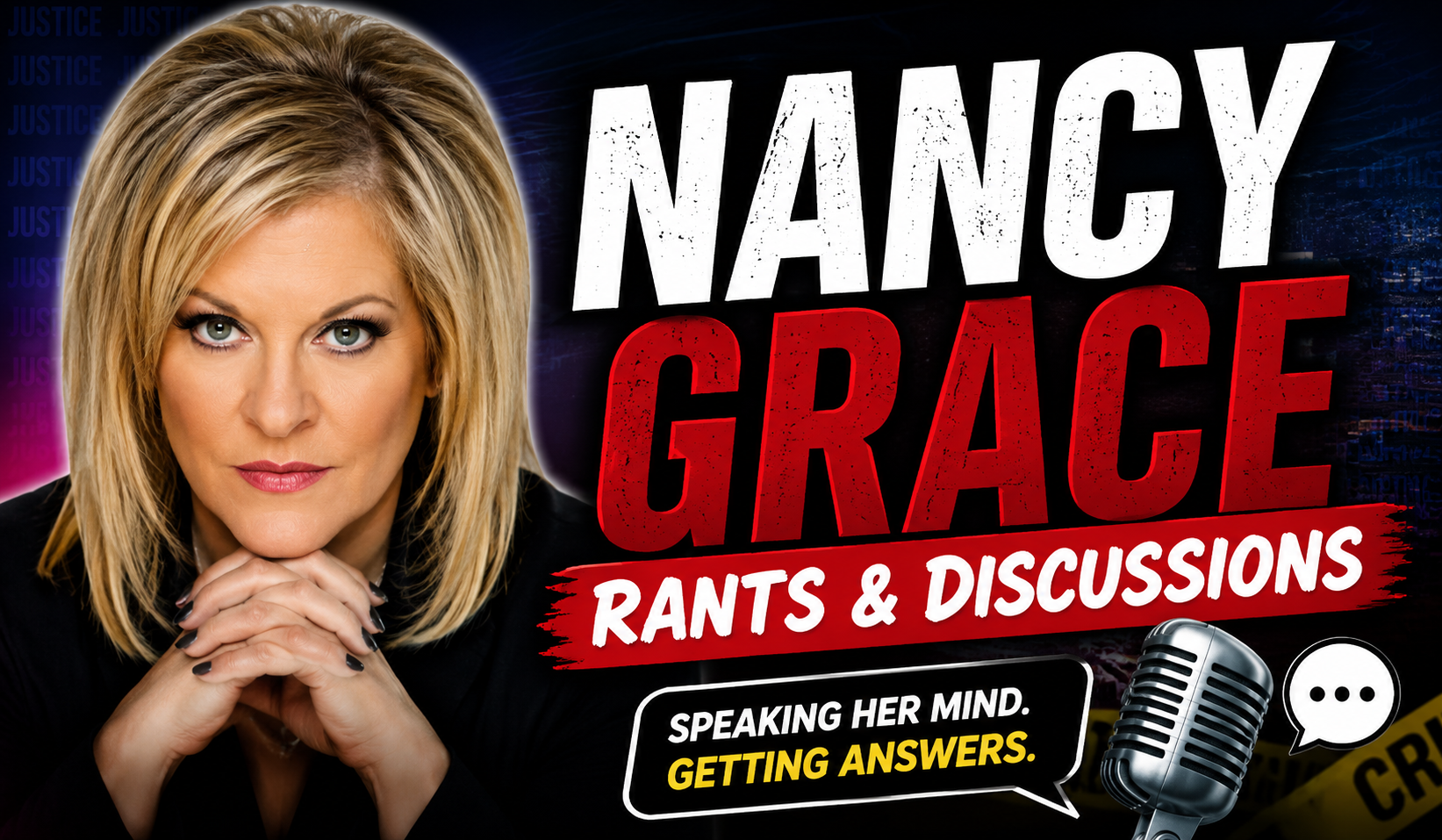

The Nolan Wells case continues to generate intense discussion across YouTube, podcasts, social media, and independent media. As more personalities become involved in covering the story, another question has started circulating: Are Nancy Grace and Don Lemon actually being sued over what they have said about the Nolan Wells case? That is exactly the kind of question that Kingdom Influence Media believes deserves a closer examination instead of an automatic yes or no based on a headline, YouTube video, social media post, or AI-generated search result.

During a recent Kingdom Influence Media discussion, Kenny and I talked about why this distinction matters. We are not here to declare Warren Hudson, Jax Pitalo, Morgan Seymour, or anyone else guilty of something that has not been proven. At the same time, asking questions about inconsistencies, evidence, timelines, statements, and media coverage is completely different from declaring someone guilty. Nolan Wells’ family deserves answers about what happened to their loved one, while the people connected to the case also deserve to have allegations against them treated as allegations unless evidence establishes otherwise. Both principles can exist at the same time.
So, Are Nancy Grace and Don Lemon Actually Being Sued?
This is where the wording becomes extremely important. Information circulating online has sometimes made it sound as though Nancy Grace and Don Lemon have already been hauled into court or formally sued. Based on the information we were able to verify, that characterization goes further than the evidence currently supports. Reporting and podcast descriptions indicate that defamation attorney Edward Paltzik has directed strongly worded communications toward Grace and Lemon concerning their coverage of Warren Hudson, Jax Pitalo, and Morgan Seymour. Brandon Tatum’s program specifically characterized them as letters sent to Grace and Lemon regarding their coverage.
That is significant, but receiving a legal warning, demand letter, cease-and-desist communication, or notice of possible legal action is not automatically the same thing as having a lawsuit filed against you. A lawsuit ordinarily involves a complaint actually being filed in court. Service or a summons is another procedural matter. That distinction gets lost quickly on social media because “Nancy Grace and Don Lemon being sued” makes a much more dramatic headline than “attorney sends letters concerning media coverage.”
Trent Out Loud also released an August 20 episode discussing the controversy under the title Nolan Wells Friends TARGET NANCY GRACE & Don Lemon — LEGAL ACTION? The description of that episode similarly states that Paltzik had put Grace and Lemon “on notice” concerning their coverage. Importantly, even that framing asks whether legal action is coming rather than establishing that a lawsuit has already been filed.
That distinction is exactly why Kingdom Influence Media believes audiences should slow down before turning developing information into established fact.
The Nolan Wells Case Has Become a Media Story of Its Own
The underlying investigation has now created an entirely separate debate over how journalists, YouTubers, commentators, attorneys, and social-media personalities are covering it. Nancy Grace has continued discussing developments surrounding Wells on Crime Stories with Nancy Grace. Her August 20 program, for example, examined claims about a possible witness to an alleged altercation involving Wells while also questioning whether social-media postings connected to that claim were authentic.
Brandon Tatum has also become a prominent figure in the online conversation. He interviewed individuals connected with Wells before subsequently appearing in discussions of the case himself. Don Lemon has criticized aspects of Tatum’s involvement and has discussed the case and the media personalities covering it. At this point, therefore, there are several overlapping stories: what happened to Nolan Wells, what people connected to him are saying, what attorneys representing different interests are saying, and how media personalities are interpreting all of it.
That is exactly where viewers have to be careful. Commentary about an investigation is not necessarily evidence from the investigation.
Why We Questioned What AI Was Showing Us
Another part of our Kingdom Influence Media discussion concerned artificial intelligence. When people search a developing story today, an AI-generated overview may appear before they ever reach an original article, court document, police statement, interview, or other primary material. That creates a serious problem when users begin treating the summary itself as the source.
AI systems can summarize information appearing across websites and other indexed material, but an AI-generated answer should not automatically be treated as independent confirmation that an event occurred. If several websites repeat the same original allegation, an automated system may encounter those repetitions without the repetitions actually constituting several independent confirmations.
This becomes particularly important with breaking stories. Suppose one creator reports that someone “may sue,” another creator describes that as someone “being targeted with legal action,” and another headline says someone is “being sued.” Those statements may all originate from the exact same underlying development even though they sound increasingly definitive.
That is why we kept asking a simple question during our discussion: Where did the original information come from?
That question isn’t an attack on any creator. It is how verification works.
Giving Credit to Independent Creators While Still Asking for Sources
We specifically discussed Trent Out Loud because his coverage of the Nolan Wells story has generated considerable attention. I believe independent creators can do excellent work and sometimes spend tremendous amounts of time following stories that larger outlets do not cover as closely. Giving someone credit for their work, however, does not mean audiences should stop asking for the underlying evidence.
When a creator reports a major legal development, viewers should ask whether there is a court filing, attorney statement, letter, police document, recorded interview, public record, or another identifiable source supporting it. If the creator obtained exclusive information directly from a source, saying that is also useful. It allows the audience to distinguish independently obtained reporting from information that originated elsewhere online.
This same standard applies to Kingdom Influence Media. When we’re expressing an opinion, we should tell our audience that it is our opinion. When we’re reporting factual information, we should provide enough sourcing for readers and viewers to investigate it themselves. Credibility should never mean asking an audience to believe something simply because we said it.
Nancy Grace and Brandon Tatum Have Even Shared the Same Platform
One of the more interesting developments is that this story cannot easily be reduced to two completely separate camps. Brandon Tatum has appeared on Crime Stories with Nancy Grace to discuss developments in the Wells case. An August 20 episode identified Tatum as a guest alongside legal, forensic, diving, investigative, and K-9 experts.
That matters because social-media arguments can create the impression that everyone involved occupies completely isolated camps. In reality, media personalities can disagree strongly about aspects of a case while still interviewing one another, debating evidence, or appearing on the same programs.
Disagreement itself does not establish who is correct.
Evidence does.
Don Lemon, Brandon Tatum and the Debate Over Giving Everyone a Platform
Our discussion also addressed the controversy surrounding interviews with the young men connected to Nolan Wells. Some viewers strongly objected to Brandon Tatum giving them an opportunity to tell their side of the story, while others believed hearing directly from them was necessary.
From a media perspective, interviewing someone is not necessarily the same thing as endorsing that person’s version of events. Journalists routinely interview suspects, witnesses, victims, attorneys, family members, investigators, critics, and people whose accounts contradict one another. The important question is what happens during and after the interview: Are claims challenged? Are contradictions identified? Is independent evidence sought? Is the audience told what has and has not been verified?
The same principle should apply regardless of race or which side of a controversy someone happens to support. Nobody should automatically become guilty because of social-media pressure, and nobody should automatically become innocent because a popular commentator believes them.
Race Should Not Replace Evidence
Perhaps one of the saddest developments surrounding the Wells discussion is how quickly portions of the conversation have become racialized. Nolan Wells was a Black man, while several individuals whose conduct has been publicly scrutinized are white. That reality understandably shapes some of the public conversation, particularly because America’s history makes allegations involving race and unexplained deaths deeply sensitive.
But race cannot become a substitute for evidence.
A white person should not automatically be considered guilty because the deceased person was Black. Likewise, questions surrounding the death of a Black person should not automatically be dismissed as “race baiting.” Both approaches prevent people from examining the actual evidence.
The questions should remain centered on the facts: What happened? What does the physical evidence demonstrate? What do verified witnesses say? What does forensic evidence establish? What does the timeline show? Which claims can investigators independently corroborate?
Those questions matter far more than the racial identity or political affiliation of the person asking them.
Nolan Wells and His Family Should Remain at the Center
Something gets forgotten when commentators begin fighting with one another: a family lost someone they loved.
Behind every viral headline, livestream, argument, interview, podcast episode, and legal threat is a family seeking answers about Nolan Wells. Whatever conclusions ultimately emerge, his family deserves a thorough investigation and truthful information.
At the same time, anyone accused publicly of wrongdoing deserves a process in which evidence matters. Wanting answers for Nolan’s family and refusing to pronounce other people guilty before the evidence establishes guilt are not contradictory positions.
They are exactly what fairness requires.
The Legal Threats Are Now Part of the Story
The involvement of a defamation attorney raises another important issue. Media personalities have broad freedom to discuss matters of public concern, but that freedom does not eliminate defamation law. Conversely, receiving a defamation warning does not prove that the recipient actually defamed anyone.
A lawyer can threaten litigation. A lawyer can demand corrections. A lawyer can send a strongly worded letter. None of those actions, standing alone, establishes liability.
Ultimately, if a defamation lawsuit is actually filed, the allegations contained in the complaint would still have to be evaluated through the legal process. Until then, audiences should be extremely careful about converting threats of litigation into declarations that someone has already been sued and found legally responsible.
That is why our thumbnail asks the question: “Nancy Grace & Don Lemon Being Sued?”
The question mark matters.
Kingdom Influence Media’s Position: Show Us the Evidence
The biggest lesson from this entire situation goes beyond Nancy Grace, Don Lemon, Brandon Tatum, Trent Out Loud, or even the Nolan Wells case. We are living in an era where information travels faster than verification.
A YouTube creator reports something. Someone clips it for TikTok. Another creator reacts to the clip. An article summarizes the reaction. A search engine indexes the article. An AI system summarizes all of them. Suddenly, thousands of people believe they are looking at five independent sources when they may actually be looking at five versions of one original claim.
That is why Kingdom Influence Media will continue asking one of the most important questions anyone consuming news can ask:
Where is the source?
If there is a lawsuit, show us the filing. If there is a legal letter, show us the letter or identify who confirmed it. If something is an allegation, call it an allegation. If something is opinion, identify it as opinion. If something has been independently verified, provide the evidence that allowed it to be verified.
We can have opinions. We can debate. We can disagree. We can even have some fun while discussing serious subjects. But when it comes to someone’s reputation, someone’s death, or allegations of criminal conduct, facts have to remain more important than clicks.
As of the information reviewed for this article, there is support for reports that defamation attorney Edward Paltzik directed legal communications toward Nancy Grace and Don Lemon concerning their coverage of Warren Hudson, Jax Pitalo, and Morgan Seymour. However, we have not independently verified a filed lawsuit establishing that Nancy Grace and Don Lemon have actually been sued over their Nolan Wells coverage.
Until evidence establishes otherwise, “legal threats or notices” and “a filed lawsuit” should not be treated as the same thing.
And that is precisely why independent media has a responsibility not merely to repeat what everyone else is saying, but to investigate where the information came from in the first place.
References
Grace, N. (Host). (2026, August 20). Nolan Wells: Altercation witness emerges? [Audio podcast episode]. Crime Stories with Nancy Grace. Omny Studio.
Lemon, D. (Host). (2026, July 31). Don Lemon & DL Hughley own Officer ‘Race Bait’em’ Tatum! [Audio podcast episode]. The Don Lemon Show. Lemon Media Network.
Tatum, B. (Host). (2026, August 19). Major update in Nolan Wells investigation (Episode 361) [Audio podcast episode]. The Officer Tatum Show.
Trent Out Loud. (2026, August 20). Nolan Wells friends target Nancy Grace & Don Lemon—Legal action? [Podcast episode]. The Trent Out Loud Show: Daily Takes on Pop Culture, News & Headlines.